




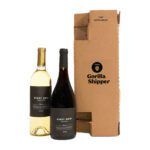
Wine, Beer and Beverage Shipping: How to Choose the Right Protective Shipper
Choosing the wrong shipper for glass bottles and cans doesn’t just mean a higher damage rate. It means replacement product, return freight, customer service time, and a buyer who doesn’t come back. The packaging decision is where most of that cost either gets built in or avoided. Here’s how to get it right.
Why Standard Boxes Fail for Wine, Beer and Beverage Shipping
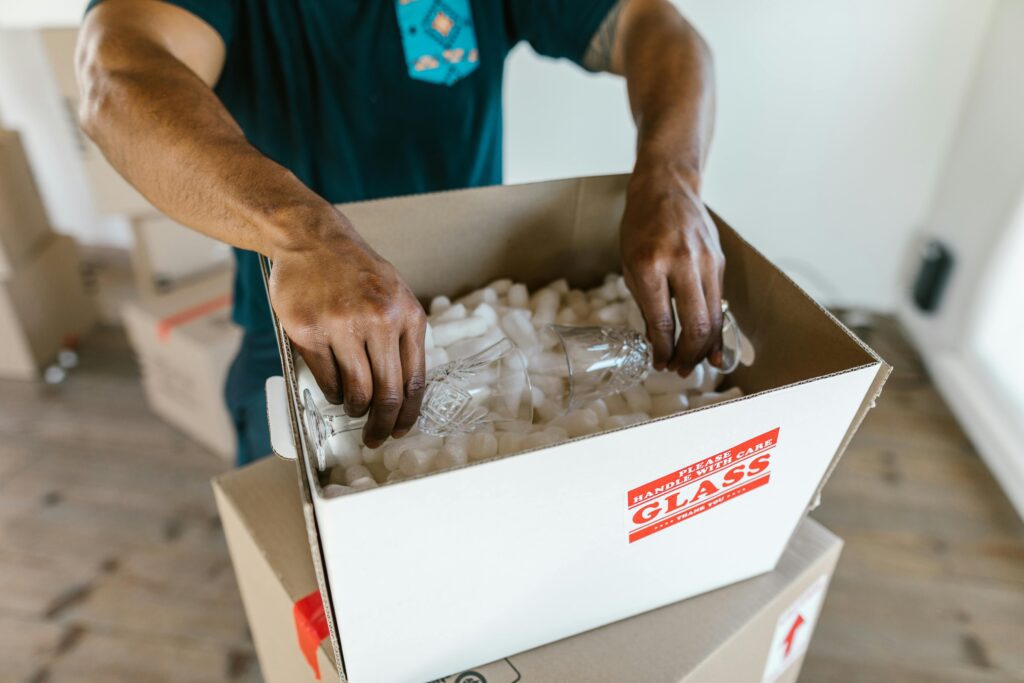
Glass bottles and cans are the highest-damaged category in ecommerce parcel shipping. And in almost every case, the damage is a packaging failure, not a carrier handling failure. A bottle moving inside a box during transit generates enough impact force to cause breakage without a drop event. Sustained vibration across a long route does the same damage more slowly.
One broken case of wine costs more in replacement product, return freight, and customer service than an entire run of certified wine shipping boxes. The fix isn’t switching carriers. It’s using a shipper built for the product.
What Makes a Wine Shipping Box Different From a Standard Corrugated Box?
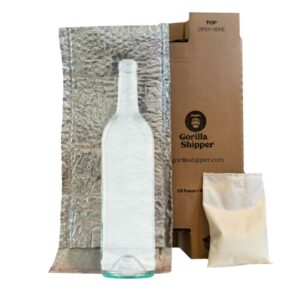
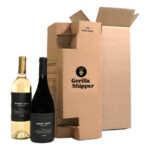
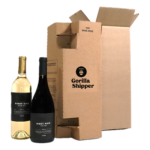
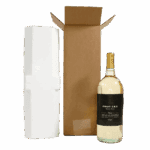
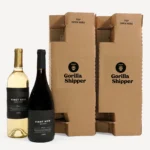
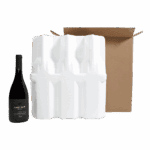
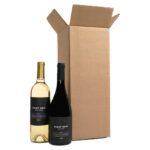
A purpose-built wine bottle shipping box has three components working together. A sturdy outer corrugated carton, minimum double-wall for wine, rated for the combined weight of product plus insert. A molded inner insert that holds each bottle in the center of the box away from the walls. And a design that eliminates all movement without relying on loose fill.
Generic corrugated boxes with void fill don’t meet that spec. Loose fill slows a bottle down. It doesn’t fix it in place. And a bottle that can move will move, across every transfer, stack, and conveyor in the carrier network.
Molded Pulp vs Foam vs Corrugated Inserts for Wine Bottle Shipping
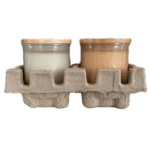
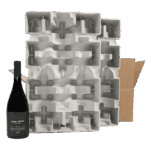
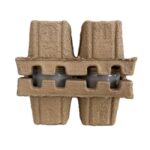
Molded pulp is the most widely used insert for wine shipping boxes. Each bottle sits in its own formed cavity, shaped to fit, with no contact between containers and no movement in any direction. It’s lightweight, stores flat before assembly, and is fully recyclable. For DTC wineries shipping through FedEx and UPS, molded pulp paired with a double-wall outer carton is the standard combination.
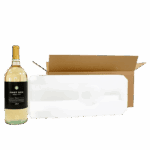
Foam inserts provide maximum cushioning and are the right call for high-value bottles, irregular shapes, or shipments where thermal protection is also needed. The tradeoff is cost, weight, and recyclability. EPS foam is not curbside recyclable and is banned from disposal in several US states.
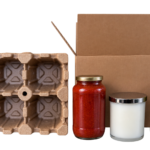
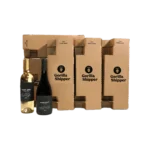
Corrugated dividers are the most cost-effective option and work well for multi-bottle configurations where separation is the priority. But they hold and organize rather than cushion. For high-impact fragile glass they shouldn’t be the sole protection layer.
Wine Shipping Box Sizes: How to Choose the Right Configuration
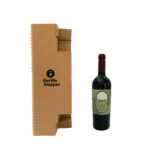
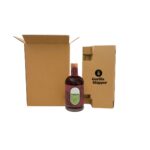
Single bottle, two-pack, four-pack, six-pack, and twelve-pack are the standard wine shipping box configurations. The right size depends on your most common order format and whether you’re shipping DTC or wholesale.
For DTC shipments, single and two-pack configurations need the strongest insert-to-bottle fit because residential last-mile delivery has the most handling variation. For wholesale, a pack of six and twelve works well. These should be packed with corrugated cell dividers to handle pallet pressure and longer transit windows. Right-sizing the wine package box to the actual order format reduces DIM weight charges and eliminates excess internal space that allows movement.
Beer and Can Shipping Boxes: What Works for Bottles, Cans and Mixed Packs
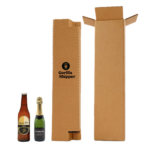
Beer bottles have the same breakage profile as wine bottles. They need molded inserts with individual bottle cavities and a double-wall corrugated outer carton. Bottle-to-bottle contact that corrugated dividers alone allow is enough to cause cracking on longer routes.
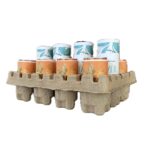
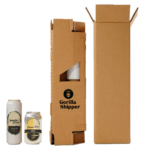
Beer cans have a lower breakage risk than glass but require protection against crush damage and seam failure. Corrugated can shippers with snug cell configurations are the standard, each can sitting in its own cell with no room to shift under compression. Mixed packs combining bottles and cans need a configuration that accounts for different heights and weights in the same carton, which usually means a custom cell layout rather than a standard format.
Alcohol Shipping Regulations: What Wine and Beverage Brands Must Know in 2026
DTC alcohol shipping is legal in 47 states as of 2026, but legal doesn’t mean simple. Some states require a license in both the origin and destination state. Others cap volume per shipment or require specific carrier agreements. You have to check compliance requirements for every destination state before shipping, not once, every time the rules change.
FedEx and UPS are the only carriers that transport alcohol. Both require adult signature confirmation at delivery, the recipient has to be verified as 21 or older before the package changes hands. USPS doesn’t carry alcohol, full stop.
ISTA-certified wine packing boxes are the safest way to document packaging compliance across both carriers. And EPS foam wine shippers are still legal to use in 2026, but they’re banned from disposal in California, New York, and several other states. For brands shipping nationally that’s an end-of-life problem that molded pulp alternatives don’t have.