

















How to Ship a Package Internationally: A Complete Guide for U.S. Small Businesses
International shipping in 2026 is more complicated than it was two years ago. The rules around customs thresholds have shifted, carrier surcharges have gone up, and the paperwork requirements that used to apply only to large commercial shipments now apply to small businesses shipping a handful of orders a month. This guide covers what’s actually changed and how to navigate it without losing money on every international order.
What Has Changed About International Shipping in 2026
Two changes are reshaping how US small businesses ship overseas right now. The US eliminated its $800 de minimis exemption for goods from China and Hong Kong in May 2025, meaning those shipments now require full customs processing regardless of value. And the EU is removing its €150 duty-free threshold on July 1, 2026, which means every parcel going to the EU now requires customs duties regardless of order value.
Most competing guides haven’t been updated for either of these changes yet. If you’re using advice from 2024 or early 2025 to plan your international shipping strategy, the compliance picture has shifted significantly underneath it.
How to Ship a Package Internationally Step by Step
The process has five steps. First, verify whether your product can be shipped to the destination country. Some categories are restricted or prohibited entirely depending on where you’re shipping.Choose the right carrier and service level for the destination and transit time requirement. Complete the customs declaration with an accurate HS code, a missing or incorrect HS code is the single most common cause of customs delays. Decide between DDP and DDU, more on that below. Then apply all required documentation and ship.
That’s it. The steps aren’t complicated. The execution is where most small businesses run into problems, usually at the customs declaration stage.
USPS vs UPS vs FedEx vs DHL: Which Is the Cheapest Way to Ship Internationally
USPS is cheapest for small lightweight parcels under 4 lbs through First Class Package International and Priority Mail International. Tracking visibility gets a bit difficult once the package leaves the US network. For budget-conscious small businesses shipping non-urgent lightweight goods, it’s often the cheapest way to ship internationally on a per-package basis.
UPS and FedEx are faster with built-in customs brokerage, better suited for time-sensitive shipments and higher-value goods. DHL Express has the strongest international network of the four and is worth comparing for destination countries where its coverage is most pronounced, though it typically runs highest on cost for parcels under 10 lbs.
Customs, Duties and Paperwork: What Every Small Business Needs to Know
Every international shipment needs a commercial invoice stating contents, quantity, value, and country of origin. The HS code classifies the product for customs and determines the duty rate. Getting it wrong delays the shipment and can trigger penalties.
DDP means you collect duties at checkout and handle customs clearance on the customer’s behalf. DDU means the customer pays duties on arrival. DDP produces fewer abandoned deliveries. Customers who get an unexpected duty bill at the door often refuse the package. With the EU removing its €150 duty-free threshold on July 1, 2026, every EU parcel needs duties accounted for upfront. DDU on EU shipments after that date is going to generate a lot of abandoned deliveries for brands that haven’t adjusted.
International Packaging Requirements for Fragile Products
International shipments go through more hands than domestic ones. A package going from a US warehouse to a customer in Germany might clear two customs facilities, move between three carrier networks, and get loaded and unloaded multiple times before it reaches the door. A box that holds up on a single UPS Ground leg isn’t built for that.
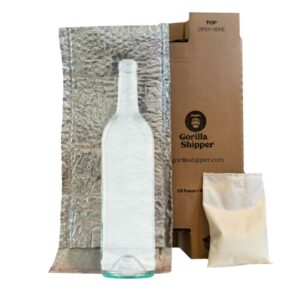
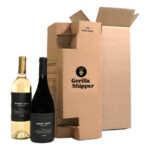
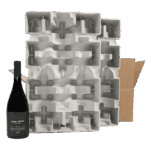
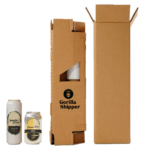
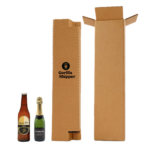
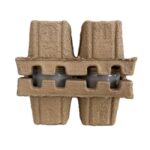
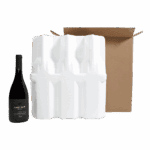
For fragile products going international, double-wall corrugated and a zero-movement insert aren’t optional. The outer carton has to handle sustained compression across multiple legs. The insert has to keep the product fixed regardless of what happens to the package in between. For businesses looking at ready-built options, Gorilla Shipper’s ISTA-certified boxes are built for exactly this, outer cartons rated for multi-leg carrier handling and insert systems that eliminate movement throughout the journey.