

















How to Ship a Large Package: The Complete U.S. Guide (2026)
If you have spent another Tuesday morning toggling between three carrier websites, trying to figure out which one won’t burn a hole in your pocket, this blog is for you.
To ship large packages cost-effectively, it is important to understand what actually affects shipping costs.
What Makes a Large Package Expensive to Ship (And How to Fight It)
Carriers don’t just charge for weight. They charge for space too. Every shipment is measured in two ways. First, the actual weight on a scale. Second, dimensional weight, or DIM weight. This is a formula based on the length, width, and height of your box. Carriers then charge you whichever number is higher. So a big, light box can cost more than a smaller, heavier one. That’s the trap most shippers fall into without realizing it.
Additionally, in August 2025, both UPS and FedEx started rounding box dimensions up to the next full inch. So if one side of your box measures 11.1 inches, it now bills as a full 12 inches. That small rounding adds up fast across hundreds of shipments.
The fix is simple. Choose the right wholesale shipping box size and cut down any empty space in the box. Whenever possible, create a snug-fit box. Once your box is right sized, then you can start comparing carriers and actually get a fair price.
Cheapest Way to Ship Large Packages: USPS vs UPS vs FedEx in 2026
If you are comparing UPS, USPS, and FedEx, there is no single winner for every shipment. The cheapest shipping carrier changes based on what you are sending.
Generally speaking, USPS is usually the most cost-effective for small and light parcels. It has no residential surcharge, and it caps out at 70 lbs. But in 2026, rates went up 7.8% on average. So don’t assume it’s automatically the cheapest anymore. Check every time.
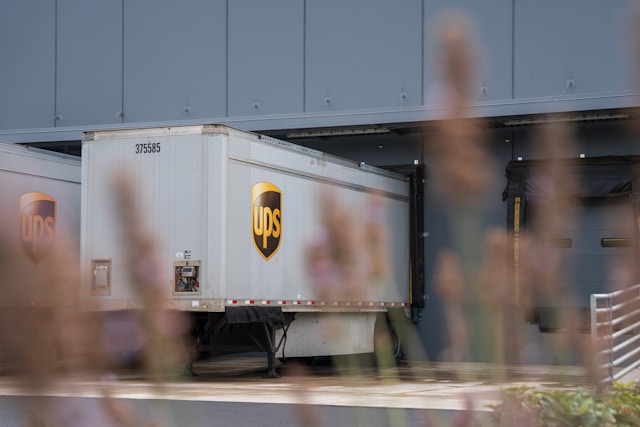
UPS works better for heavier packages and business shipping needs. However, it levies a $6.50 residential surcharge per package, and can handle up to 150 lbs.
FedEx used to be noticeably cheaper than UPS for years. That gap closed this year, for shipments above 10 lbs. FedEx charges a $6.45 residential surcharge, just a little under UPS. FedEx works better for urgent deliveries and specialty shipments.
A simple rule to remember: for shipment under 10 lbs, select USPS. At 10 lbs or above, select either UPS or FedEx Ground. However, remember to Rate shop every single package. It sounds tedious, but it’s the only way to ship cheap.
Large USPS Flat Rate Box: When It Saves You Money and When It Does Not
The USPS Large Flat Rate Box offers one price up to 70 lbs, regardless if you are shipping across town or across the country. This works great for dense, heavy items going a long distance.
That being said, it is not a magic box for everything. If your item is light but bulky, a flat rate box can get costlier than other shipping methods. Also, sometimes UPS or FedEx commercial rates undercut USPS flat rate, especially for shorter zones.
One additional thing that may be ‘make or break’ for a business is the branding. While shipping with a flat rate box, you cannot swap in your own custom carton.
A flat rate box is great for certain situations, however it is always recommended to check the current price and dimensions.
Cheapest Way to Ship Heavy Items Over 70 lbs
Once you cross 70 lbs, you cannot consider USPS. UPS and FedEx both accept packages up to 150 lbs through their standard Ground services. So for most heavy shipments, you can choose from either by comparing prices.
Things change once you cross 150 lbs. LTL freight (less than truckload) becomes your cheaper option. Both UPS Freight and FedEx Freight handle pallet shipments built for this exact weight range.
Rather than defaulting to UPS or FedEx, especially when shipping short distances, regional freight carriers are often cheaper. To simplify your shipping decisions, keep two numbers in mind: 70 and 150. 70 lbs is where USPS drops out. 150 lbs is where parcel carriers hand things off to freight.
How Packaging Affects the Cost of Shipping Large Items
Earlier in this blog, we noted how box selection affects your shipping bill. Remember two things, if your box is bigger than your product, you will face a dimensional weight charge. If your packing is weak, it will result in product damage and extra re-shipping cost. This hits hardest for businesses shipping fragile, large items.
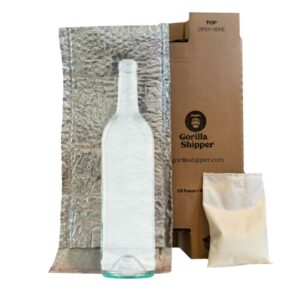
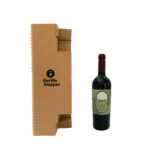
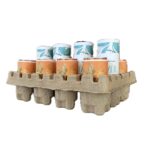
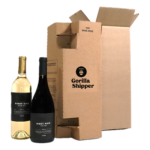
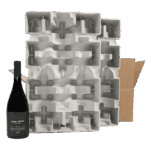
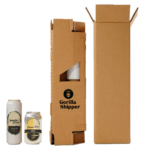
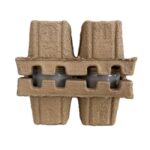
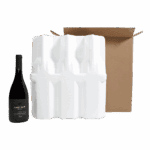
For safe shipping, a double wall corrugated outer carton paired with a fitted molded pulp insert makes a huge difference. It will lower the dimensional weight and reduce the risk of damage.
This is exactly the kind of packaging Gorilla Shipper designs. Corrugated and pulp packaging that is certified and designed especially for your product. While it does protect your delicate product from damages, it even cuts costs.
See Gorilla Shipper packaging that reduces dimensional weight and damage on large shipments.
How to Get the Cheapest Shipping Rates on Large Packages
Now that we’ve covered the technical aspects and costs of shipping large packages, let’s shift our focus to the practical side. Here’s what you need to know when it comes to shipping large items in real-world scenarios.
- Buy your postage online instead of at the counter. Commercial rates typically save you 10 to 20% compared to retail counter prices.
- Use a multi-carrier rate comparison tool. Rates shift by zone, weight, and season, so compare every shipment rather than assuming.
- If your volume is growing, negotiate. Once you are shipping 50 or more parcels a month, UPS and FedEx are usually open to volume discounts.
- For short zone shipments, look into regional carriers.
- Rightly size your box. This one step helps every other strategy on this list work better.