






Where Can I Buy Shipping Boxes? Best Places for Small Businesses in 2026
So you need shipping boxes. If you’ve never bought them for a business before, the options can feel overwhelming – retail store, Amazon, specialist supplier. The choices are everywhere, and the right answer depends on what you’re shipping and how often.
If you are shipping wine bottles, beer cans, glass jars, or candles, this guide is for you. For fragile products, where you buy shipping boxes is not just a logistics question. It is a make-or-break decision for your damage rate, your customer experience, and your bottom line.
Let’s break it all down.
The Best Places to Buy Shipping Boxes in the U.S.
There are four main channels where businesses buy shipping boxes in the U.S. Each one works differently. And, that being said, each one has real trade-offs.
Retail Stores
Home Depot, Walmart, Staples, Office Depot. You can walk in and walk out with boxes the same day. That is the upside. The downside is that these are generic corrugated boxes built for general use. There are no insert systems. No fragile-specific sizing. No ECT ratings that match the actual weight of glass bottles. And the per-unit cost at retail is genuinely high compared to what you would pay buying in bulk.
For a one-off personal shipment, retail is fine. For a business shipping regularly, it gets expensive fast.
Carrier Locations
UPS, FedEx, and USPS all sell boxes at their stores and online. USPS even gives some away for free if you are using their Priority Mail service. But those free USPS boxes are tied to that specific carrier service. You cannot use them with UPS or FedEx. And the sizing is fixed around the carrier’s needs, not yours. There is also no insert system, which means fragile items are still at risk even inside a carrier-branded box.
Online Marketplaces
Next comes online marketplaces like Amazon and Uline. You can find a lot of small businesses here searching for where to buy shipping boxes online. But again, most of what you find is standard corrugated. It is simply a box. You won’t get a packaging system. For anything fragile, a plain corrugated box without an insert is only half the solution.
Specialist Suppliers
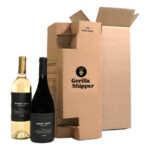
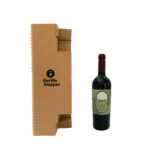
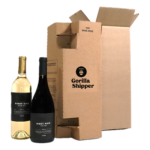
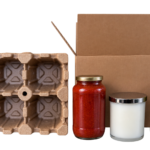
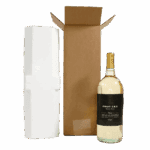
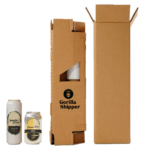
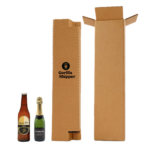
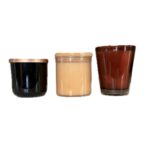
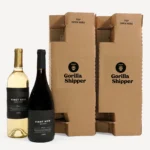
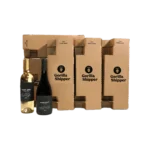
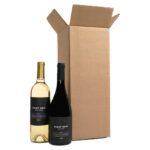
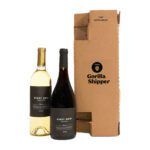
This is where it gets important for anyone shipping fragile glass. Specialist suppliers like Gorilla Shipper build boxes specifically for what is going inside them. Wine bottles. Beer cans. Glass jar candles. Mason jars.
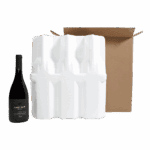
The boxes come with insert systems that hold each container in a fixed position during transit. They are carrier-certified. They are ECT-rated for the actual weight of filled glass. And they ship flat, so storing bulk stock won’t take a lot of your warehouse space.
If you are a small business shipping fragile products, a specialist supplier becomes an option that’s quite practical. Because the cost of damaged shipments will outpace the price difference between a generic box and a purpose-built one faster than you expect.
What to Look for When Buying Shipping Boxes for Small Business
A lot of small businesses buy the cheapest box that fits their container roughly. And then they wonder why they are dealing with damage claims. Here is what actually matters when you are buying shipping boxes for small business use.
Crush Resistance
Every corrugated box has an ECT rating. This is basically an Edge Crush Test. The test tells you how much stacking pressure the box walls can handle before they give in. In a delivery truck or warehouse, boxes are stacked. The ones at the bottom take the weight of everything above them. If the ECT rating is weak, the walls get compressed and then the product gets damaged. Hence, if you are into glass bottles and heavy jars, always check the ECT rating. Do not go by thickness alone.
Insert Compatibility
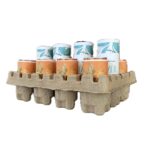
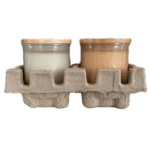
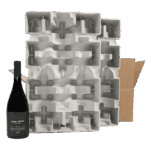
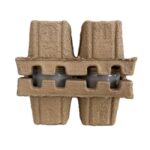
The insert is what actually protects your product. Not the box. The box is the outer shield. The insert is what stops your bottle or jar from moving during transit. Movement is the number-one cause of breakage in shipping. Molded pulp inserts, Hexabox structures, foam liners, these hold each container individually in a fixed pocket so there is no sliding, no clinking, no contact between containers. When you are looking at shipping supplies for small business, ask whether the box comes with insert options. If it does not, keep looking.
Flat-Pack Storage
Pre-assembled boxes take up a serious amount of space. Flat-pack boxes fold out when you need them and stack down to almost nothing when you do not. For a small business working out of a compact space, this is not a minor convenience. It is a real operational advantage.
Carrier Certification
FedEx and UPS both have packaging requirements for fragile items. If your box is not certified and something breaks in transit, a damage claim can be denied. Gorilla Shipper’s Hexabox & Pulp packaging is ISTA 6-FedEx-A certified, which means it has been tested against real-world shipping conditions. That includes drops, vibration, and compression, and it holds up. That certification takes the guesswork out of compliance.
How to Buy Shipping Boxes in Bulk Without Compromising on Quality
Here is how most people think about bulk buying. More boxes, lower cost per unit. Simple math. But there is a version of this that works against you.
Buying 500 cheap, uncertified boxes in bulk is not a smart move if 10% of your shipments end up broken. You have not saved money. You have pre-paid for a damage problem at scale. The unit price looked good. The total cost did not.
So, before you commit to a bulk order, here is what to actually check.
Is the box tested and certified?
Certifications like ISTA testing give you third-party proof that the box has been put through real shipping scenarios and held up. Don’t just take the supplier’s word for it. Ask for the certification.
Does the insert system work at volume?
At low volumes, mismatched boxes and inserts are a minor inconvenience. At high volumes, they slow down your packing line and create errors. You want a system where the box and insert are designed to work together so packing is fast and consistent every time.
How does it store?
If you are buying shipping boxes in bulk, you are storing a lot of them. Flat-pack is essential at that point, not optional. Make sure your bulk order ships and stores flat.
Gorilla Shipper’s bulk pricing model
We offer tiered bulk pricing across three levels. Bronze starts at $1,000, Silver at $2,000, and Gold at $3,000 and above, with up to 15% off on qualifying orders.
Our boxes ship flat so stocking up does not create a storage problem. And because our boxes are certified and insert-compatible, buying in bulk means locking in better pricing on packaging that actually does its job. No matter if you are doing a subscription box business, an ecommerce store, or a seasonal winery operation, that pricing is built to work in your favour.
Free Shipping Boxes – What’s Actually Free and What It Ends Up Costing You
Everyone loves free. So let us talk about free options honestly.
USPS Priority Mail Boxes
USPS gives away Priority Mail boxes at no cost. You can order them at usps.com or pick them up at any post office. Genuinely free on the box itself. But they are locked to USPS Priority Mail service only. You cannot use them with UPS or FedEx. Sizing is fixed and limited. And there is no insert system, which means fragile glass containers are still unprotected inside. For occasional low-stakes personal shipments, these work. For a business shipping glass regularly, they are not built for it.
Liquor Stores and Grocery Stores
Used boxes, usually free for the asking. Liquor stores go through a lot of cardboard and are happy to pass it along. But used boxes have already been through transit once. The structural integrity, whatever it was to begin with, is lower now. For fragile and valuable products, a used uncertified box is a risk you are taking on yourself.
Facebook Marketplace and Freecycle
Same situation. Free, used, unsized for your product, uncertified. Fine for a one-off personal shipment. Not a packaging strategy for a business.
The real cost of free
Here is what nobody says out loud. When you ship a fragile product in an uncertified box and it breaks, you cover the product cost, the refund or replacement, the re-shipping, and the damage to your customer relationship. One broken shipment to a first-time buyer is often a lost customer for life. Free boxes are not free when you count what they cost you when they fail. For fragile products, they will fail.
The Complete Shipping Supplies Checklist for Small Businesses
The box is just the starting point. Here is everything a small business actually needs to ship safely and look professional doing it.
The Outer Box
Your corrugated outer carton. ECT-rated for the weight of your product, sized as close to your product dimensions as possible, and carrier-certified if you are shipping fragile items. This is your first line of defence.
Protective Inserts
Molded pulp, Hexabox structures, or foam liners depending on your product. These go inside the outer box and hold each container in a fixed position. Without this, you just have a container, not a protective system.
Void Fill
For any remaining space after the insert is seated. Crinkle paper, air pillows, or kraft paper. The goal is zero movement inside the sealed box when you shake it.
Packing Tape
Good quality tape, not the thin stuff. All seams need to be properly sealed. A box that pops open in transit is just as bad as one that collapses.
Fragile Labels
Carriers do not guarantee special handling. You have to put a visible fragile sticker that influences how some handlers treat a package. For glass, it is worth using.
A Label Printer
A thermal label printer is a small investment that saves significant time if you are shipping consistently. Hand-writing addresses at volume is slow and creates errors.
Custom Packaging
This is optional but worth thinking about as you grow. Custom packaging for small businesses does not require a massive minimum order. Branded boxes, branded tape, or a printed insert card turn a delivery into an experience. The unboxing moment is your last touchpoint before the customer forms their opinion of your brand. Make it count.
Gorilla Shipper’s packaging brings the outer box and insert system together as one complete solution. You are not sourcing components separately and hoping they work together. It is all designed as one protective system, which is exactly what shipping supplies for small businesses should look like.