


Pulp vs Foam vs Corrugated Inserts: Which Protective Packaging Is Right for You?
The insert choice is where most packaging decisions actually go wrong. Not the box, not the carrier, not the void fill. The insert. And picking the wrong one doesn’t just mean a higher damage rate. It means higher DIM weight charges, sustainability compliance issues, and a customer experience that doesn’t match what the product deserves. Here’s how the three main insert types actually compare.
Why the Insert Matters More Than the Box
Most shipping damage isn’t caused by the outer carton failing. It’s caused by product movement inside the box. The insert is what eliminates that movement. A double-wall corrugated box with no insert will still produce breakage for glass, liquid, and fragile goods. And a right-sized insert in a standard corrugated box outperforms an oversized box with void fill every time.
What Is Molded Pulp Packaging and How Does It Work?
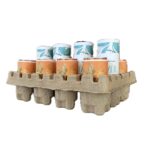
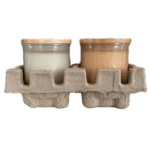
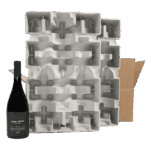
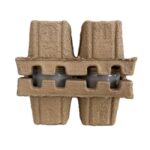
Molded pulp is made from recycled paper fibers formed into rigid, product-specific shapes under heat and pressure. The result is a cavity built around the product itself, not adapted from a generic shape. Each unit sits in its own cradle, fixed, isolated, with no room to shift during transit.
Four grades exist. The thick wall is coarse, cost-effective, and used for heavy-duty cushioning. Thin wall comparatively gives a smoother finish and can be used for higher end products. Transfer molded has one smooth side and one rough side and is the most common format in ecommerce. Thermoformed is smooth on both sides, used for premium applications.
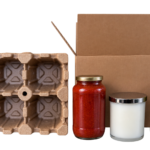
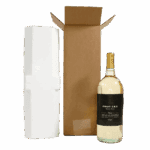
For bottles, jars, and cans, molded pulp inserts create custom cavities that cradle each unit individually. No loose fill, no movement, no contact between containers. 100% recycled paper content, fully compostable, biodegradable, and curbside recyclable in most US markets.
Foam Inserts for Shipping: Types, Uses and Limitations
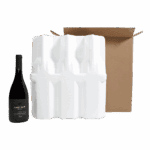
Three main foam types show up in protective packaging. EPS is rigid, it is the same white foam that you see in electronics packaging. It provides strong shock absorption and is cheap. EPE is flexible and lightweight with good vibration resistance and can be layered or die-cut. Polyurethane is softer and used where precision cavity fit matters most.
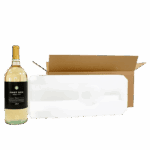
Foam inserts for shipping work well for high-value electronics, optical or medical products, and irregular shapes needing precision cavities. But EPS is not curbside recyclable and is banned from disposal in several US states. Foam is often used in generic cut shapes, allowing product movement on longer routes.And it adds dimensional bulk that increases DIM weight charges on every shipment.
Corrugated Inserts and Dividers: When Cardboard Is the Right Choice
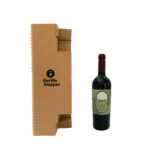
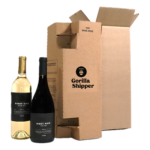
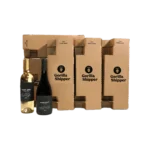
Corrugated inserts come in four formats. Cell dividers create individual cells for multiple units. Die-cut inserts are shaped to the product profile. Corrugated pads and layer boards handle all the stacking pressure. And corrugated cradles hold cylindrical products like bottles and cans in position.
Corrugated performs well in multi-pack configurations and kitting boxes. But it holds and organizes rather than cushions. For high-impact fragile goods it shouldn’t be the sole protection layer.
Molded Pulp vs Foam Inserts: Which Offers Better Protection?
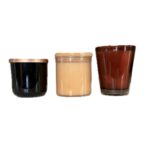
Foam wins on maximum shock absorption for high-value electronics and precision-engineered fragile goods. But that’s a narrow category. For ecommerce businesses shipping bottles, jars, candles, and food and beverage products, molded pulp packaging wins on almost every other measure. Product-specific retention, stacking strength, humidity resistance, and sustainability.
Foam shifts in generic cut shapes over longer routes and allows movement that molded pulp, shaped to the product, simply doesn’t. And the environmental cost of foam is a separate problem on top of the performance one. Molded pulp provides comparable protection at parcel network speeds with a fraction of the downstream liability.
Which Insert Is Right for Your Product? A Decision Framework
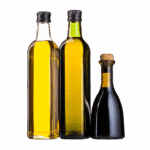
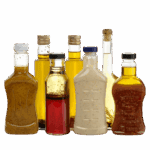
Glass bottles and jars, wine, spirits, hot sauce, olive oil. Molded pulp insert in a corrugated outer carton. Eliminates movement, ISTA-certifiable, recyclable end to end. Candles and cylindrical fragile goods. Molded pulp or corrugated cradle depending on weight and drop height. High-value electronics. Custom foam for maximum shock absorption. Multi-unit configurations. Corrugated cell dividers as primary separation plus a corrugated or pulp outer carton.
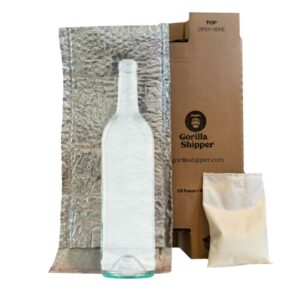
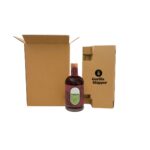
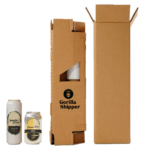
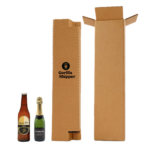
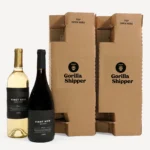
For businesses looking at ready-built options, Gorilla Shipper carries pulp shippers, foam shippers, and the Hexabox corrugated insert system, each built around the specific protection requirements of fragile ecommerce product types.
Sustainable Packaging Inserts: Why Molded Pulp Is Replacing Foam in 2026
EPS foam is banned from disposal in California, New York, and several other US states. That’s a current compliance risk for any DTC brand shipping nationally, not a future one. Molded pulp is curbside recyclable, compostable, and made from recycled paper content.
Brands switching from foam to molded pulp inserts reduce per-unit material cost at volume, eliminate foam disposal liability, and align with the 67% of US shoppers under 40 who factor sustainability into purchase decisions. Gorilla Shipper‘s molded pulp inserts are made in the USA from recycled materials.